Taking Poetic License in Writing — and Song Lyrics!
Poetic license refers to straying from the conventional rules of language to create an effect when speaking or writing. And in today’s case, we’re talking about writing.
In professional writing, we can take poetic license from time to time. It can be effective as a way of changing the mood of a phrase, creating humor, or breaking a grammar rule for the sake of a piece’s tone or voice. An English professor might refer to my starting the above sentence with “And” poetic license.
In healthcare writing where I do much of my work, we’re trying to make messages as easy to understand as possible for the reader. That might not mean using poetic license to be clever or funny, but it certainly can mean not following a rule to get a meaning across clearly.
In music, poetic license is used all the time. In the spirit of the holiday season, I thought I’d share some festive songs that use poetic license to make a lyric work well, to liven up a thought, or simply to match a rhyme.
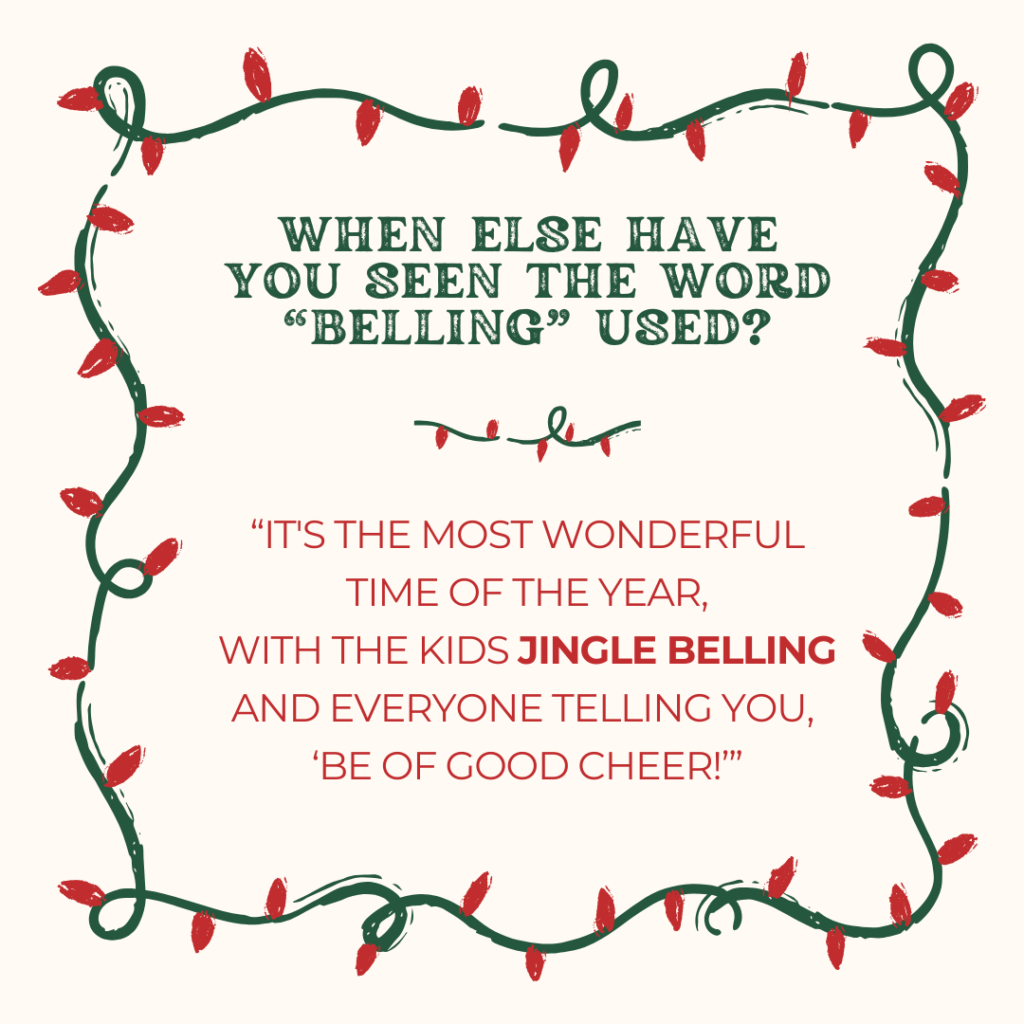
From “It’s the Most Wonderful Time of the Year”
It’s the most wonderful time of the year,
With the kids jingle belling
And everyone telling you,
“Be of good cheer!”
When else will you hear someone say “belling,” let alone “jingle belling”? It’s delightful and paints a great picture for the listener.
It’s the most wonderful time of the year.
There’ll be much mistletoeing
And hearts will be glowing
When loved ones are near.
Another great use of turning a noun into a verb! There’s no confusion here; the listener doesn’t need any other explanation to understand this lyric.
(Credit goes to songwriters Edward Pola and George Wyle for this one; well done!)
From “You’re a Mean One, Mr. Grinch”
You nauseate me, Mr. Grinch,
With a nauseous super “naus!”
This song was written by Dr. Seuss for the original animated film based off of his book. Master poet Dr. Seuss uses poetic license beautifully here. We all get how horrible “naus” is in this line.
From Adam Sandler’s “The Chanukah Song”
This song brings the funnukah right from the first verse. Sandler takes poetic license all through this song, like here:
Put on your yarmulke
Here comes Chanukah
So much funnukah
To celebrate Chanukah
And here:
David Lee Roth
Lights the menorah
So do James Caan, Kirk Douglas,
and the late Dinah Shore-ah
Silly, yes, but that’s the whole point, and he gets across his point perfectly.
Can you think of other examples of poetic license taken during the holiday season? If so, I’d love to hear them.
Think about when you might be able to take poetic license in your own writing, and enjoy doing so!
____________
Check It Out: Feature in The Leaflet Newsletter
Fellow proofreader Julie Corbett of The Proofreader Greenhouse recently featured me in her newsletter, The Leaflet. Julie is super supportive of those who do editing and proofreading, and I was so happy she chose to include me.
____________
Something You Might Not Know About Me…
A family tradition of ours is to make my husband’s family Italian wedding soup recipe for Christmas Eve dinner. My kids have been brought up on this soup. I once even mashed it into baby food consistency. It is delicious and I can’t wait to again enjoy it this year!
____________
Discussion
What’s up? I’d love to hear from you! Here are some things to consider sharing:
- What are some lyrics from holiday songs that you like?
- When’s the last time you took poetic license in your professional writing?
- What’s a favorite recipe you make during the holiday season?
Like this post? Sign up here for once-a-month updates from me.